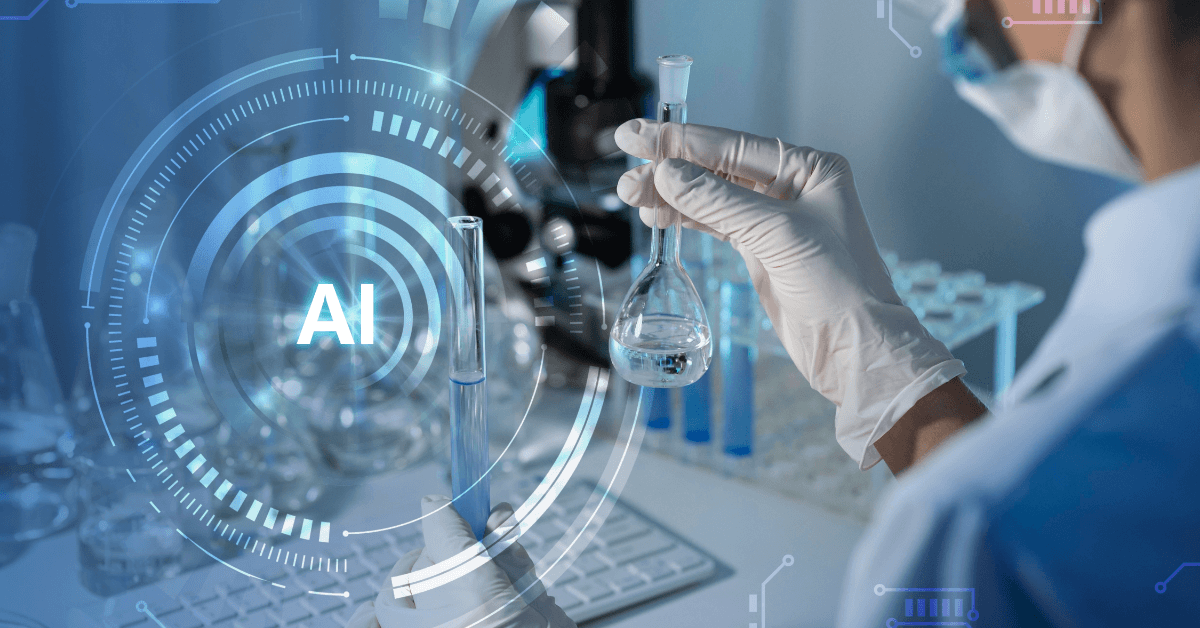
The pharmaceutical and biotechnology industries are experiencing an unprecedented surge in enthusiasm around artificial intelligence (AI). From generative chemistry to AI-driven drug design platforms, the promise is compelling: faster discovery, better molecules, and fewer failures. Headlines suggest that algorithms can now design drugs, predict success, and optimize development paths with minimal human input.
But while AI and other models, such as PBPK, are and will remain valuable tools in drug development, they cannot be a substitute for decades of scientific experience, translational judgment, understanding financial constraints and regulatory understanding.
Sometimes a nonclinical study may serve multiple masters from regulatory, to business development/capital raising, intellectual property protection/development, to critical scientific knowledge growth. All within the constraints of the budget.
The Hype Around AI-Driven Drug Design
AI-driven drug design platforms are being positioned as end-to-end solutions capable of generating novel molecules, optimizing properties, and accelerating the path to the clinic. By integrating large datasets, predictive models, and iterative optimization cycles, these tools aim to identify compounds that appear “lead-like” on paper.
There is no question that AI can improve efficiency in certain areas. It can accelerate data processing, assist with literature mining, highlight structure–property relationships, and support hypothesis generation. Used correctly, AI can help scientists ask better questions faster.
The problem arises when AI is presented not as a tool, but as a replacement for scientific judgment. Note, Alan Turing’s ‘Christopher’ in the movie The Imitation Game still needed some structured input in order to solve Enigma. The scientist must be an integral part of the development process.
Why AI-First Drug Design Falls Short
Drug development is not a computational exercise alone. Biological systems are inherently complex, variable, and highly context-dependent. AI models are only as good as the data used to train them — and much of the most valuable knowledge in drug development never makes it into structured datasets.
AI does not understand:
- Whether an apparent “lead” can achieve meaningful exposure in vivo
- How pharmacokinetics will evolve across species
- When a clean in vitro profile masks a fatal translational flaw
- How regulators will interpret a data package
- Why similar programs failed quietly years ago
Most importantly, AI does not know when not to proceed.
PK, PD, and Translation Are Not Algorithmic Problems
One of the biggest limitations of AI-driven drug design is the assumption that optimizing molecular properties will naturally lead to clinical success. In reality, many drug candidates fail not because of chemistry, but because of poor exposure, flawed dose or delivery assumptions, or misunderstood biology.
Pharmacokinetics (PK) and pharmacodynamics (PD) are not abstract outputs — they require interpretation. Understanding whether a molecule can reach the right tissue, at the right concentration, for the right duration is a judgment built from experience. Translating nonclinical data to humans requires more than scaling equations; it requires knowing when modeling applies and when it does not. No algorithm replaces that.
Why AI-First Drug Design Falls Short
Decades of drug development experience teaches lessons that AI (or large language models) may not ever learn:
- Which early signals are meaningful and which are noise
- When additional optimization adds value — and when it delays the inevitable
- How to design studies that answer the right question
- How to sequence development steps to avoid regulatory dead ends
- How to recognize programs that look promising but will never survive the clinic
- How to balance multiple masters to the data set
These insights come from programs that failed, pivots that worked, and decisions that never appeared in a database.
Using AI Responsibly in Drug Development
AI works best when guided by human judgment. The most effective teams treat AI as a supporting tool, not a substitute for expertise. AI can help explore chemical space, organize data, quickly gain insight into new pharmacological targets and accelerate workflows. But experience determines how those outputs are interpreted, validated, and applied.
AI does not understand:
- Hypothesis generation
- Data organization and pattern recognition
- Scenario exploration
AI should not dictate:
- Candidate selection
- Dose strategy
- Translational assumptions
- Regulatory positioning
Those decisions remain human responsibilities.
Using AI Responsibly in Drug Development
Drug development remains a complex and judgment-intensive discipline. Success depends on understanding biology, pharmacology, and regulation as an integrated system — not as isolated predictions. Teams with deep experience know how to use AI tools wisely, question outputs critically, and recognize when the data tells an uncomfortable truth.
Conclusions
The future of drug development is not AI-driven or experience-driven alone. It is experience-led, with models such as PBPK and AI used thoughtfully and responsibly as a supporting tool. Companies that rely solely on algorithms risk moving faster in the wrong direction. Those that pair advanced tools with deep scientific judgment will continue to deliver drugs that actually make it to patients.
At Xyzagen, we believe that no platform can replace decades of hands-on bioanalytical, pharmacology, PK, and overall drug development experience. Contact us to learn how our experience-led, science-driven approach can help advance your program with confidence.